A DYNAMIC TRADITION OF JAPAN
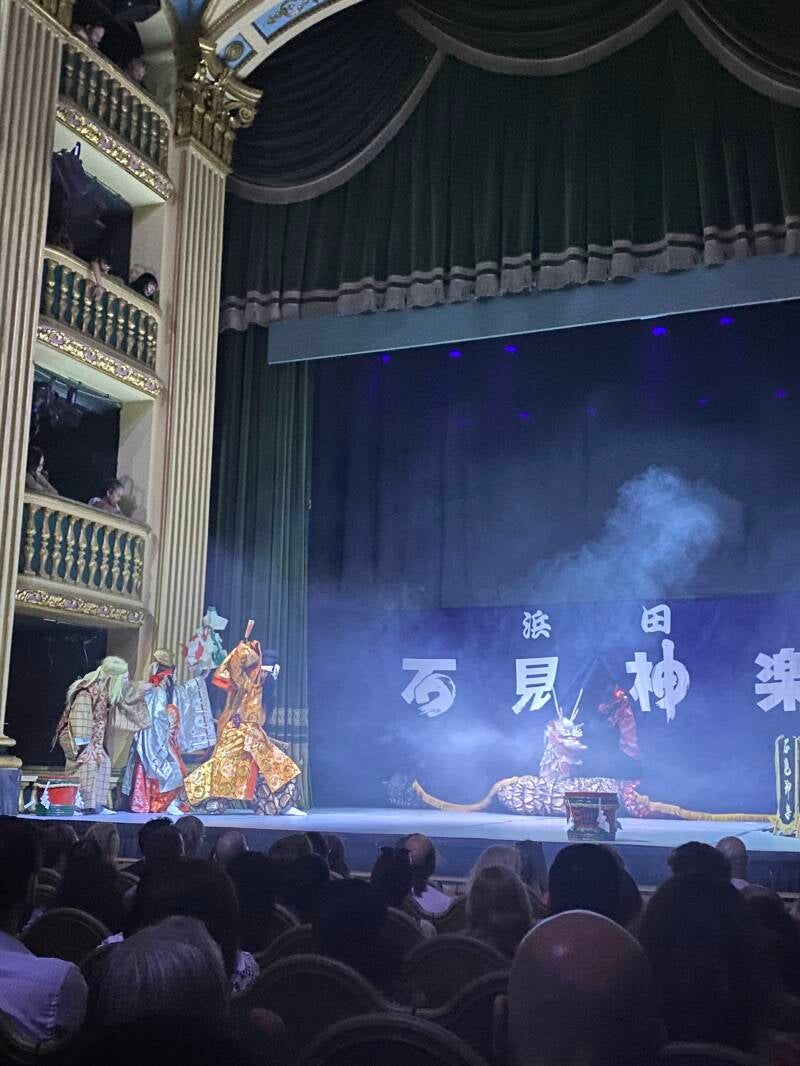
On the 5th of September 2025, Malta had the occasion to hold an event in collaboration with the Embassy of Japan, for its 60 anniversaries from the establishment of their diplomatic relations. The event was marked with a traditional Japanese ritual. The Old Manuel Theatre inaugurated the scene with a wide variety of musical instruments, artistic expressions, extravagant clothes, and masks on stage.
The performance was exhibited by Japanese artists with a rich background on the tradition of IWAMI KAGURA: A dynamic tradition of Japan. Iwami Kagura is a traditional dance originating from the area of Hamada City, Southwest of Japan.
To open the ritual, a group of Japanese men dressed on their oriental clothes carrying on hand’s drums and flatus. They waited for the clapping and then set aside to let the main floor to the performers.
The show started with the appearance on stage of Yamakaoto , the king of arches and war, who needed to destroy the tremendous king of demons, who had flown all the way from his awkward kingdom to destroy the kingdom of the livings. Yamakaoto confronted the malevolent spirit with his sacred bow and arrows. The conflict between justice, represented by deities, and evil, represented by demons, is a hallmark theme of Iwami Kagura. The battle was eventually won by Yamakaoto.
After their performance, a new comic figure entered in the stage, it was Ebisu, the god of bountiful catches and prosperous business, enjoying a fishing trip at Milho No Misaki. He represented happiness; you could say it from his mask designed in a very happy mood. He was an happy little chubby god on extravagant clothes intent in a slight hard fishing. Even though the fishing of this fish was extremely tiring for him, he kept on going happily because that was his nature.
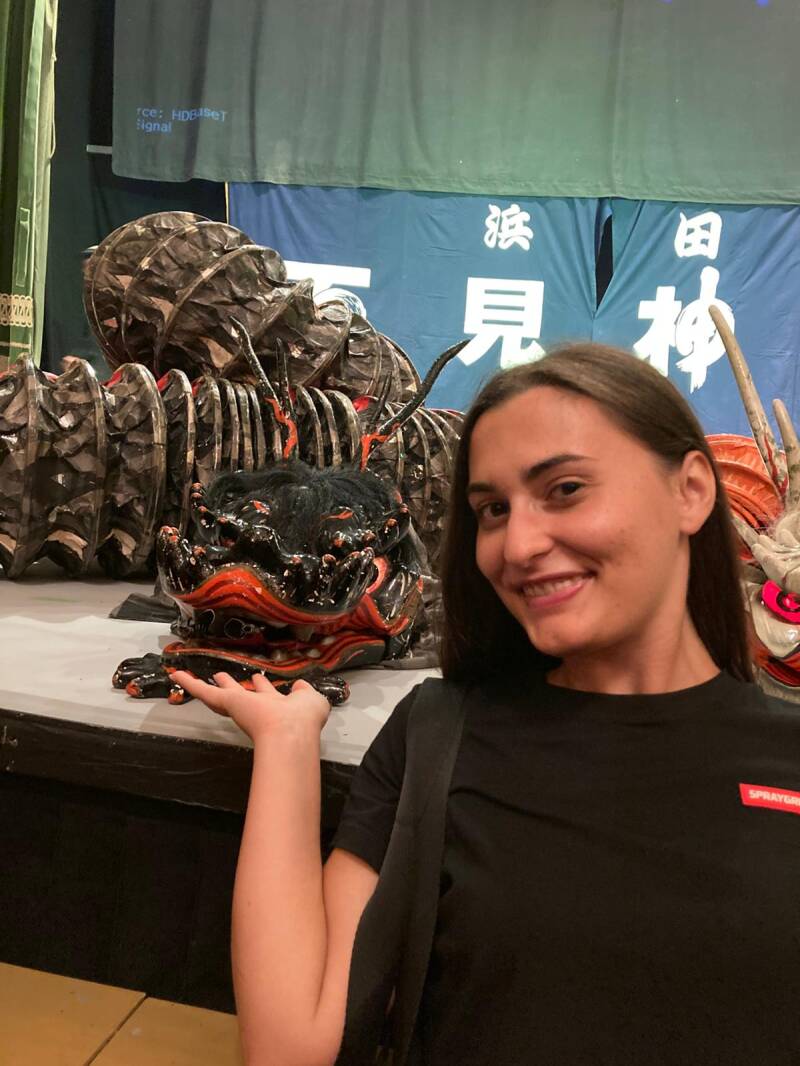
After the interval, the audience was advised that the stage was going to be filled up by Susanoo, the deity of Sun, Sea and storm who evoked Orochi, the fearsome eight-headed giant serpent, to battle him. Before the dragoon invocation, the first ones to set the coming scene, were two traditional old Japanese peasants with rural style, walking with the help of a wood stick and accompanied by a young fashioned lady, Inada no Hime , who happened to be the last alive daughter of Susano . The three set aside to let the sun King evocate the 4 head big dragoon that wanted to kill Susano’s last daughter. Once the dragoons were evoked, they started to fill in the stage with the spirit of a fire -eater. Orochi is also said to symbolize river floods, and the story is thought to depict the struggle between humans and natural disasters. After having performed their ferociousness for quite of time, they were intent to roll up the Sun King malevolently into their tides. However, the Sun King with his extreme potency managed to unfetter from themselves while strike dry blows to their heads. The joy glorious moment arrived once the Sun king leaned the heads of the 4 dragoons on the edge of the podium.
The performance, which is annually held in various parts of the world, was an extravagant dive into traditional Japan , and such event helped to consolidate the relationship of harmony intercurrent between Malta and Japan especially.