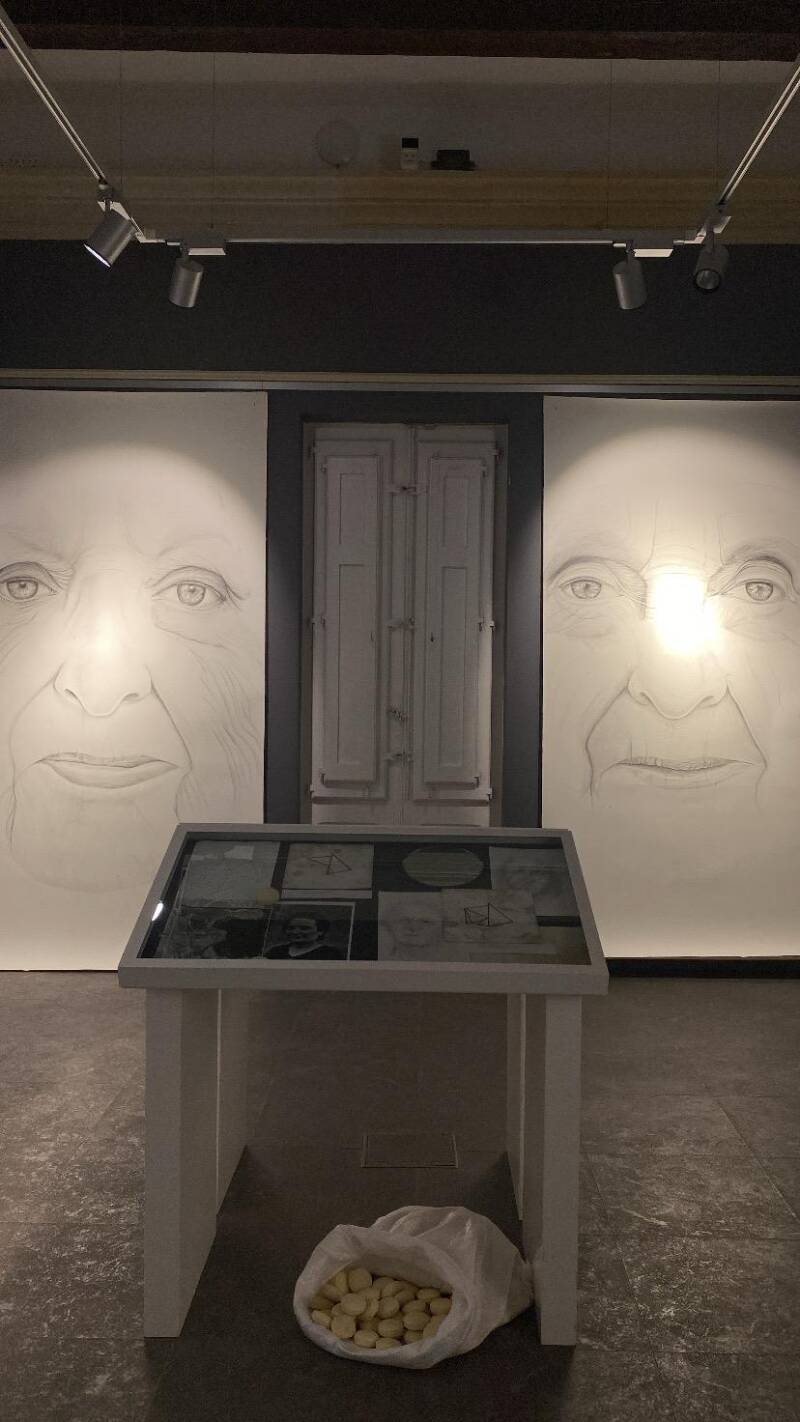
The Hela project is a very sensitive exhibition in Valletta, that showcases the concept of wastefulness within cultural and ecological contexts. It explores the absenteeism of awareness in domestic -private practices, i.e the feminine technique and practices transmitted from mother to daughter for instance. It is a soft experience that fuses ecology, and the Anthropocene concession to make the ecological inhabit the domestic.i. e to wash clothes with natural bar soap, Under an Anthropocentric perspective , the 'ecological rendered a practice ultimately', loses its 'importance' and is given for granted 'once the habits of doing things with its rawness , reiterate over space and time. It is certainly an invitation to reconsider the relationship among the naturalness that surrounds the Anthropocene and the Anthropocene that makes use of it to develop habit, that often time becomes ' phantoms ' of space and time.
In this regards It is a multidisciplinary project that explores the concept of wastefulness within cultural and ecological contexts. Objects techniques and practices that by time have been put aside as ' non useful' or not worthy of consideration, now regain a new sense of identity. These include domestic craft, care practices, environmental intuition, community-bulding traditions and forms of resilience that were transmitted matrilineally. It appeared to be reinforcing the bonding of women generation through the cultivation of practices as techniques that were considered 'wasted and useless ' throughout history. It invites to reconsider such 'abandoned techniques' and the relationship that women in particular had between them and with their natural surrounding. It urges mother and daughters to reflect on their manner of crafting a space which welcomes the naturalness, not inhabiting it only anthropologically but also post humanly.
The project mirrors on this cultural inheritance: the wisdom carried through gestures, rituals and shared labour; the everyday strategies that women developed to manage scarcity, maintain social cohesion, and steward natural resources. Hela considers how the erosion of this knowledge missed opportunity to draw from sustainable. How to re awake the techniques and their truer ecological semantic, a semantic that has been phantomized by historical discourse? By digging in the archeology of the 'ceiled , bringing it back to life, the project reopens a dialogue with the matrilineal heritage and its relevance today. The project inspires to confer a rediscovery of the secret wisdom that generations have inevitably, though subtly, transmitted across decades and centuries.
It explores the 'toxic relationship of Anthropocene with its surrounding'. The artwork is our response to the socio-environmental crisis that defines our present moment. Through eco political narratives, (post human perspective of political citizenship) the artists present strategies for environmental renewal, fitness and eco-conscious ways of living, addressing Malta's most urgent ecological challenges - issues that have emerged from the combined effects of capitalist power structures and sustained neglect. In this regards, the project represents small intentional act of resistance. The ecological decay connects to the overlooked cultural labour.
Author’s Note: This article is intended as a personal reflection and philosophical analysis of the work of Jennifer Apap Brown and Mirjiana Batinic . All references to the original work are made solely for the purpose of celebration and constructive critique of the performance. All rights to the work belong to its respective authors.
Performance attended on: [05-06-2026] > Venue: [National Post Museum, Valletta ]